
Editor's note: Several years ago this Shark periodically visited a relative at the Warren Barr Nursing Home in Chicago and noticed the "zombie like" demeanor of many of the residents. In particular was an elderly married couple who sat together at meals and never spoke. In the period prior to the "health department" inspection I noticed that all of the residents walked with a spring in their steps and the married couple were speaking to each other. Your ProbateShark can only surmise that prior and after the inspection, the residents were sedated to make them more easily "malleable" and less problematic to the staff. Lucius Verenus, Schoolmaster, ProbateSharks.com
Nursing Homes Rarely Penalized For Oversedating Patients


NPR's analysis of government data found that harsh penalties are almost never used when nursing home residents get unnecessary drugs of any kind. Owen Franken/Corbis hide caption
itoggle caption Owen Franken/Corbis 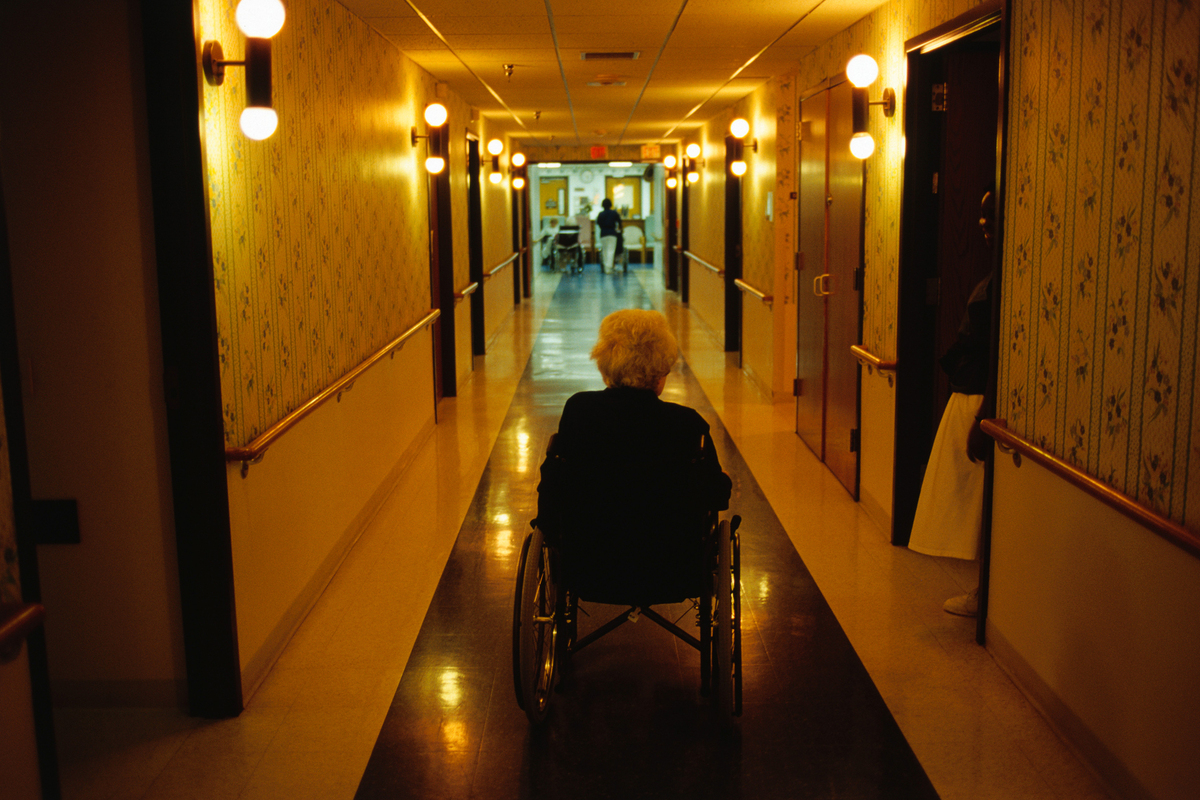
NPR's analysis of government data found that harsh penalties are almost never used when nursing home residents get unnecessary drugs of any kind.
Owen Franken/Corbis Take Texas for example. More than a quarter of nursing home residents there still get antipsychotic drugs. Since the beginning of the federal initiative, the nationwide average has dropped below 20 percent. That puts Texas in last place compared with other states and the District of Columbia.
So Texas is playing catch-up. The state recently conducted a series of trainings to teach nursing home employees that there are alternatives to giving residents powerful drugs. Nursing home activities director Roxanne Stengel attended a session in Houston. She's been in the business for a long time. So it was not a surprise to her that Texas was in last place.
Check NPR's interactive database below to see the history of antipsychotic drug usage at nursing homes in your area and how they compare to national and state averages.


No comments:
Post a Comment
Thank you for commenting.
Your comment will be held for approval by the blog owner.