Showing posts with label Rosa Parks. Show all posts

Tuesday, November 4, 2014

Auction house sues Rosa Parks’ ex-lawyer over her $10M estate

Auction house sues Rosa Parks’ ex-lawyer over her $10M estate

A New York auction house is suing Rosa Parks’ former lawyer, saying he screwed up the sale of her estimated $10 million estate, costing it nearly a million bucks in lost fees and expenses.
Guernsey’s says in its Manhattan suit that Detroit lawyer Gregory Reed led it to believe “he had the ability to secure the assignment of the estate of Rosa Parks for auction” after the civil-rights icon died in 2005 at age 92.
Reed had previously represented Parks in a lawsuit against the rapper Outkast.
Modal Trigger
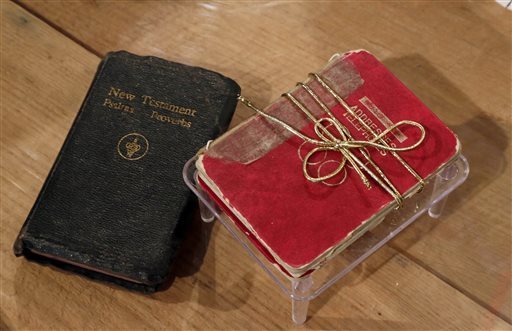
Rosa Parks’ Presidential Medal of Freedom (left) and her Congressional Gold MedalPhoto: AP
Included in Parks’ historic treasure trove were her Congressional Gold Medal and a postcard from Martin Luther King Jr.
But Parks’ heirs balked at Reed’s claim and then launched into a series of demands to Guernsey’s including that the sale be private and to a single buyer, according to the suit.
Billionaire Warren Buffet’s son, Howard, purchased the collection last month for a bargain $4.5 million.
He said he plans to donate the items to a museum.
Guerney’s says it could have gotten a lot more in fees from individual sales at a public auction.
“Unlike an auction, which would have had a discrete amount of time for preparation, then be conducted and be over, it took Guerney’s seven years, countless work hours and hundreds of thousands of dollars, all of which would have been avoided by an auction, to arrange the private sale the property,” the suit says.
It adds that Reed is still demanding a cut from the sale.
Reed said the case suit stemmed from a “misunderstanding” and was resolved. He said the complaint “grossly mischaracterized” his effort to protect Parks’ legacy. He wanted the civil rights giant’s estate to “be preserved for mankind and not” auctioned off.
Filed under

Saturday, October 18, 2014

Cash-strapped heirs mine rich legacies of civil rights icons

Cash-strapped heirs mine rich legacies of civil rights icons

It is becoming a familiar, unfortunate spectacle in the years and decades after the death of a major civil rights figure: Heirs squabble over whether memorabilia left behind should be donated to a library or museum in the interest of securing the deceased’s place in history or sold to the highest bidder in an increasingly lucrative collectors’ market.
The case of Rosa Parks was resolved last week when the nonprofit Buffett Foundation paid $4.5 million for warehouses full of the icon’s papers and memorabilia and then donated them for at least the next 10 years to the Library of Congress in Washington. Yet that came nine years after Parks’ death and after a probate court’s solution to disputes among her survivors — even though Parks’ will clearly outlined her wishes.
“Heirs can often disagree, which is unfortunate,” said Adrienne Cannon, the curator of the Library of Congress’ Civil Rights History Project who is assigned to process the Parks material. “If a collection is jointly owned by a number of heirs and they don’t agree where the collection should be placed or whether it should be donated or sold, then the collection is often left in limbo. We don’t proceed with finalizing a gift with the donors unless there is an accord.”
Historians and archivists view the Parks case as an extreme example — one that both impedes historical research and has the potential to sully the image of the historical figure — of a story that has repeated itself in other cases involving major figures of the mid–20th century.
Aside from the internecine battle among the Parks kin, the children of the Rev. Martin Luther King Jr. are also — more than three decades after his assassination — fighting over the disposition of certain items, most notably his Bible and his Nobel Peace Prize. Some children of Malcolm X, slain almost 40 years ago, sued last year to stop one of their sisters from permitting the publication of his diary.
“It’s a really sad commentary on these legacies,” said Samuel Black, president of the Association of African American Museums and director of African-American programs at the Heinz History Center in Pittsburgh. “It’s starting to be what we talk about more when we talk about Martin Luther King. It’s hard to talk about him without talking about this sidebar thing with his children.”
In the case of Parks, who died in Detroit at 92 in 2005, she left instructions that her materials be owned by her foundation, the Rosa and Raymond Parks Institute for Self-Development, and managed by a close friend who would receive 90 percent of the royalties. Her nieces and nephews, who were to receive 10 percent of the royalties, disputed the will and aimed to sell off her items in private sales. A probate court eventually ordered an auction, but there were no bidders for the material in the $8 million to $10 million price range set by Guernsey’s auction house in New York.
In late August, Howard Buffett, a son of billionaire investor Warren Buffett, ended the dispute by buying the material — which includes Parks’ Presidential Medal of Freedom, a postcard from Martin Luther King Jr. and a pillbox hat she may have worn on the historic day in 1955 when she refused to give up her seat on a Montgomery, Alabama, bus — for $4.5 million.
Last week he lent it to the Library of Congress for a decade. “I’m only trying to do one thing: preserve what’s there for the public’s benefit,” Howard Buffett said in a statement. “I thought about doing what Rosa Parks would want. I doubt that she would want to have her stuff sitting in a box with people fighting over them.”
While nasty familial disputes aren’t exclusive to the families of black historical figures, historians say they pop up with particular frequency in this realm in part because the families tend to be far less affluent than the heirs of white icons of significance. When King died, for instance, he left behind little for his family to live on, said noted civil-rights-era photographer Bob Adelman, recently appointed as the Library of Congress’ photographer in residence.
“When [King] died, nobody passed the hat. There was no effort to take care of the family,” Adelman said. “Malcolm’s items were stored somewhere, and nobody paid the bill because the family couldn’t afford it. These people are victims, and we should be very charitable in thinking about them and their trying to survive in various ways.”
Also, Black said, the civil rights era is receding — and major figures are dying — at a time when there is both an unprecedented interest in the collections and artifacts of famous black leaders as well as a heightened awareness, thanks to eBay and PBS’ “Antiques Roadshow,” that such items could have monetary value. The Parks collection may have been overvalued by the auction house, he said, but it was eventually sold for millions. “If Rosa Parks had died 20 years earlier, there probably would have been fewer people interested in her material,” he said.
The profit motive has, in fact, become a bigger issue not only after icons die but also in later years when those around them realize the potential value. In the case of late civil rights attorney Florynce Kennedy, who died in 2000, her sisters sued to regain important materials they believed opportunists had taken from the home of an increasingly senile Kennedy, said University of Michigan historian Sherie Randolph, whose biography of Kennedy is due out next year. Randolph helped the family organize Kennedy’s materials and donate them to a library at Harvard University. Yet she’s confident some conspicuously missing items — notably Kennedy’s files from her work as an attorney for the jazz great Billie Holiday — are still at large.
“After Flo’s sister dies, we’ll see the Holiday papers on eBay, I bet,” Randolph said. “So many people could have had access to her house, but none of those papers are there. None of Flo’s notes, nothing like that.”
Black and others hope that other aging legends — the Rev. Jesse Jackson, actors Sydney Poitier and Bill Cosby, singer Harry Belafonte — take heed from these messy, embarrassing disputes and be mindful of how their possessions can assist in providing evidence of their historical activities.
“You can’t foresee if there’s going to be an issue, but you have to put it out there and say there’s a possibility this will happen,” Black said.
If not for Buffett’s philanthropy, he noted, the postcard between Parks and King could have ended up “framed and mounted on a collector’s mantel somewhere in Rome or something.”
Attribution:
Cash-strapped heirs mine rich legacies of civil rights icons
Nine years after Rosa Parks’ death, her memorabilia finally lands at the Library of Congress
Steve Friess
September 24, 2014
Al Jazeera America
http://america.aljazeera.com/articles/2014/9/24/rosa-parks-civilrightsiconsarchives.html
Share

Tuesday, April 29, 2014

Rosa Parks’ Belongings Remain Unsold While Heirs Continue Feud Over Her Will

Rosa Parks’ Belongings Remain Unsold While Heirs Continue Feud Over Her Will

48
 
1
 
0
Google +
0
Reddit
0
 
1
 
0
 
Rosa Parks belonging remain unsold A collection of Rosa Parks‘ belongings, potentially worth several million dollars, is still sitting unsold in a New York warehouse as her heirs continue to feud over the civil rights memorabilia.
Civil rights era memorabilia is worth millions right now as America celebrates the 50th anniversary of the era. However, Parks’ belongings are out of the public eye and out of reach of scholars and historians.
While Parks’ will seemed to make it clear that the civil rights icon wanted her belongings to be given to the institute that bears her name, her nieces and nephews challenged the will and now the court has seized the belongings.
The collection includes school books, family Bibles, clothing and papers relating to her work for the Montgomery branch of the NAACP.
A judge ordered that all the items be sold in one lump sale to the highest bidder.
No bidders emerge for Rosa Parks memorabilia
Credit: Richard Drew – AP
The problem is that no bidder has emerged willing to cough up the $8 million to $10 million asking price for the memorabilia.
Other sales of civil rights era memorabilia have netted more than three times the price set for Parks’ belongings.
The city of Atlanta handed over $32 million to the children of Dr. Martin Luther King Jr. for his papers.
The Henry Ford Museum paid nearly $500,000 for the bus on which Parks’ refused to give up her seat for a white passenger in 1955.
According to Elaine Steele, a longtime friend of Parks who heads the Rosa and Raymond Parks Institute for Self Development,  it’s clear what needs to be done with Parks’ belongings, but the probate court is standing in the way.
“In my opinion, it was quite clear what she wanted,” Steele said.
Steele’s attorney, Steven Cohen, said the key is to “close out the estate and get away from the probate court.”
“It will happen,” Cohen added. “But right now we’re hamstrung, because the probate court continues to want to monitor and control our activities and it shouldn’t.”
Museums and educational institutions have already shown interest in the belongings, but no one has placed a bid yet.
Associate Director of Curatorial Affairs at the Smithsonian National Museum of African American History and Culture, Rex Ellis, admitted that it would be an honor to have Parks’ archives in the museum, but he never offered to place a bid.
The museum is scheduled to open next year, which will coincide with the 60th anniversary of the Montgomery bus boycott.
“She was just an extraordinary figure that any student of American history, not African-American history, any student of American history should know and be aware of,” Ellis said.
Both Steele and Ellis hope that the belongings will find their way to a public space soon where scholars, historians and the general public can enjoy them and celebrate Parks’ legacy.

Friday, July 22, 2011

Estate of Rosa Parks plundered, claims lawsuit

View Cook County Probate Court Corruption Videos at this blog site: http://northshorelive.blogspot.com/


Estate of Rosa Parks plundered, claims lawsuit


By Adam Sherwin

Saturday, 23 July 2011
AP

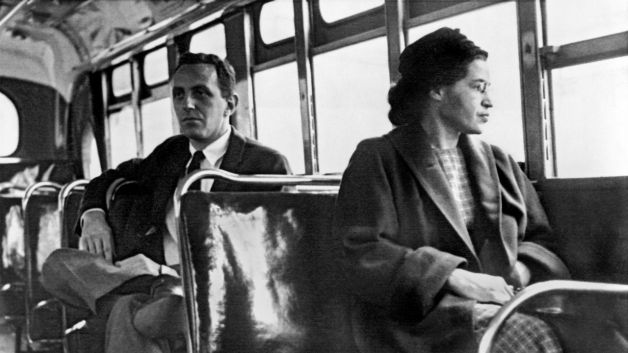
Rosa Parks riding on a bus in Alabama in 1955, the act of defiance that led to the civil rights movement
The estate of civil rights pioneer Rosa Parks is facing bankruptcy, with historically important items of memorabilia at risk, papers filed in a Michigan court allege.
Ms Parks became the first lady of civil rights in 1955 when she defied segregation laws by refusing to give up her seat on a bus in Montgomery, Alabama, to a white man. She was arrested and the resulting outcry prompted a boycott of Montgomery's buses.
Ms Parks died in 2005 aged 92, after instructing that her estate should fund an institute in her name which would teach young people leadership and character development. But her legacy has become mired in a long-running legal dispute.
A court filing by Steven Cohen, who represents the Rosa and Raymond Parks Institute for Self Development, claims a judge allowed two other lawyers to pile up fees that drained about two-thirds of the estate's $372,000 (£228,000) value.
"Since Mrs Parks's death, the court system of her adopted city (Detroit) has embarked on a course to destroy her legacy, bankrupt her institute, shred her estate plan and steal her very name," Mr Cohen alleged.
With the money running out, Mr Cohen claimed lawyers John Chase Jr and Melvin Jefferson Jr persuaded a judge to order the Parks Institute to forfeit her vast memorabilia collection so it could be auctioned. Mr Cohen wants that decision overturned, along with a judge's decision to grant the lawyers – whose actions are backed by Parks's nieces and nephews -- the rights to license the Rosa Parks name.
The memorabilia collection, which includes medals, papers and the hat she wore on the historic ride, is now in the hands of a New York auction house. With the ownership of the collection valued at $10 m (£6m) in limbo, vital items are being lost, Mr Cohen argued.
The coat that Ms Parks wore on the bus ride, seen worldwide in photographs and one of the most valuable items in the collection, is missing. But Lawrence Pepper, a lawyer representing the Parks' nieces and nephews, said the coat had been lost long ago.
Ms Parks had given it to one of her nieces when she was attending college about 40 years ago. Her niece wore it and got rid of it. "She didn't realise it had any value," Mr Pepper said.
The Henry Ford Museum in Dearborn, Michigan, reportedly bid $1.2m (£735,000) for the memorabilia collection. The relatives who challenged Ms Parks will want to give the Institute's share of the proceeds to charity and share the rest among themselves.
Ms Parks, who had no children, was a 42-year-old secretary of the Montgomery chapter of the National Association for the Advancement of Colored People when she made her stand. She received many honours, including the Presidential Medal of Freedom.
The Parks estate included $227,000 (£139,000) which Rosa won in 1999 after suing hip-hop band OutKast for using her name in a song without permission.

Please read complete article at link below:


http://www.independent.co.uk/news/world/americas/estate-of-rosa-parks-plundered-claims-lawsuit-2319061.html

Editor's note:  Strange...this article was initiated in jolly old England...yet it rings true...across an ocean to the mirror image corruption in the Cook County Probate Court.  Lucius Verenus, Schoolmaster, ProbateSharks.com