Showing posts with label NPR. Show all posts

Wednesday, February 4, 2015

Attorney ordered to pay $4.3M to trust

Attorney ordered to pay $4.3M to trust

NPR, UNICEF and others fought woman's behest to lawyer

A sign board gives directions to the office of UNICEF in Yangon, Myanmar. (AP file/Gemunu Amarasinghe)
A sign board gives directions to the office of UNICEF in Yangon, Myanmar. (AP file/Gemunu Amarasinghe) The Associated Press
A judge who determined that an Encinitas lawyer manipulated his relationship with a wealthy and mentally ill woman who left her fortune to him has determined the lawyer must pay $4.3 million to the woman’s trust.
Superior Court Judge William Nevitt Jr. ordered that attorney Carl Dimeff make the payment in a tentative ruling issued on Dec. 23.
It’s the latest development in a long-running lawsuit filed by four prominent nonprofits, including NPR and Doctors Without Borders, over the estate of the late Siv Ljungwe, a longtime schoolteacher in Redlands who amassed a fortune in real estate and other investments before her death in 2010.
The charities argued that it was Ljungwe’s wish that her fortune be divided in equal parts among them, according to the terms of a 2004 trust she had drawn up.
They contended that a second trust made in 2008 that left all her money to Dimeff was invalid because the attorney had exerted improper influence on Ljungwe.
In court papers, Dimeff’s lawyers have said he did nothing improper, and that Ljungwe did exactly what she wanted to with her money when she decided he would inherit it all. Dimeff said he helped to shield her from a vindictive husband, and she was grateful for his help. In fact, the lawyers said, Dimeff was “truly surprised that she left him her entire estate.”
In a ruling in October and the one this month, Nevitt agreed with the charities, saying Dimeff is not credible and prepared the 2008 trust documents. The judge invalidated the 2008 trust, made when Ljungwe was suffering from mental illness and a bizarre fixation on Dimeff, an experienced estate lawyer.
Nevitt ordered Dimeff to provide an accounting of all the money and property in the trust for a second phase of the trial to determine how much he would have to pay back, including penalties and interest.
After several days of testimony in early December, Nevitt concluded the total Dimeff has to pay is $4.3 million. That includes $1.3 million in cash and securities he paid or transferred to himself. It also includes a penalty of $2.6 million, or twice the amount taken, and interest of $335,662.
Neither Dimeff nor his lawyers responded to a request Wednesday to comment on the ruling. Lawyers for the charities also did not respond this week.
In the tentative ruling, Nevitt said Dimeff’s accounting of what he did with the assets of the trust was “riddled with errors” and did not fully account for all the money.
For example, he found that some $520,000 in cash Dimeff paid to himself was not shown in his accounting for the court. Bank statements and other documents showed the transactions.

WATCHDOG

The judge faulted Dimeff for “concealing his dealings with Siv Ljungwe’s assets after her death through his erroneous and incomplete accounting.”
The ruling by Nevitt also appointed a new, permanent trustee for the estate. The assets will now presumably be divided under the terms of the 2004 trust, with funds going to the SDSU Research Foundation/KPBS and UNICEF, as well as NPR and Doctors Without Borders.

Monday, February 25, 2013

Editor’s note: Way to go  Nina "City of Death" Lucius Verenus, Schoolmaster, ProbateSharks.com


States Take Sides As Court Revisits Voting Rights Act


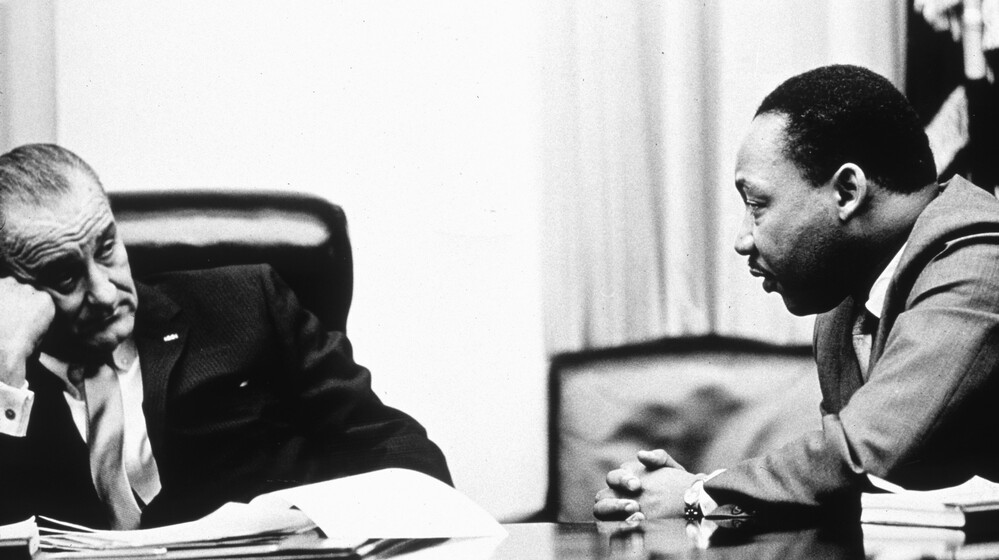
President Lyndon Johnson and civil rights leader Martin Luther King Jr. discuss the Voting Rights Act in 1965. On Wednesday, the Supreme Court hears arguments on whether a key part of the law is still needed nearly a half century after its passage.

Hulton Archive/Getty Images
President Lyndon Johnson and civil rights leader Martin Luther King Jr. discuss the Voting Rights Act in 1965. On Wednesday, the Supreme Court hears arguments on whether a key part of the law is still needed nearly a half century after its passage.


President Lyndon Johnson and civil rights leader Martin Luther King Jr. discuss the Voting Rights Act in 1965. On Wednesday, the Supreme Court hears arguments on whether a key part of the law is still needed nearly a half century after its passage.
Hulton Archive/Getty Images


The U.S. Supreme Court hears arguments next week in a case that tests the constitutionality of the 1965 Voting Rights Act, the law considered the most effective civil rights statute in American history. At issue is whether a key provision of the statute has outlived its usefulness.
A staggering 49 friend of the court briefs have been filed, among them briefs from 11 states urging the court to either strike down or uphold the law. What is intriguing is that some of the states now arguing against the law were not troubled by its provisions just four years ago, the last time it was before the court.
In 2009, a small Texas utility district challenged the so-called preclearance section of the law, which requires nine states, most of them in the South, and parts of other states like California and New York, to get advance approval from the Justice Department or a federal court in Washington before changing any voting laws or regulations.
When the case got to the U.S. Supreme Court, only one state — Georgia — came out clearly against the law, claiming that the provision was unconstitutional. Alabama filed a brief echoing part but not all of Georgia's arguments. Both emphasized that their respective states have changed dramatically since 1965, and asked the court to seriously consider the legality of the preclearance section, given its burden on covered states.
The Supreme Court in 2009 dodged the preclearance question, but the issue is back this year in a challenge brought by Shelby County, Ala. And this time seven states — Alabama, Alaska, Arizona, Georgia, South Carolina, South Dakota and Texas — are asking the court to strike down the law.
Of the seven, Arizona has made the most noticeable switch between 2009 and 2013. In 2009, Arizona joined a brief supporting the law, along with North Carolina, California, Louisiana, Mississippi and New York.
Back then, Arizona and the other states said that the preclearance section of the law was "not onerous," and that indeed, preclearance had offered "some benefits," for example, protecting them from expensive litigation. The states supporting the law said that although some of them had expressed initial resistance to the preclearance process when the Voting Rights Act was originally adopted, "by 2006 the process for seeking preclearance had become painless and routine."
Today, however, Arizona is on the other side of the debate, saying something very different. The preclearance requirement, it now argues, is "arbitrary and burdensome," and unconstitutional.
Arizona's governor this time, as last, is Republican Jan Brewer. Though she was quite new to the job in 2009, she had previously held the job of Arizona secretary of state, the position that deals with elections.
Four other states — Alaska, Louisiana, South Carolina and Texas — also seem to have changed their tune since 2009. Back then, Louisiana supported the law, while Alaska, South Carolina and Texas were silent on the issue, taking no position. This time, Louisiana is silent, while Alaska, South Carolina and Texas are urging the Supreme Court to strike down the preclearance provision.
Among the states that are fully covered by the preclearance requirement, Mississippi seems to be the only one that has consistently supported the law. The state signed on to briefs in 2009 and again this year urging the Supreme Court to uphold the law.
New York, California and North Carolina — states that are only partially covered by the preclearance mandate — also have remained true to the positions they took four years ago. Like Mississippi, they are supporting the constitutionality of the law, declaring that it is not unduly burdensome.

http://www.npr.org/blogs/itsallpolitics/2013/02/23/172697429/states-take-sides-as-court-revisits-voting-rights-act