Showing posts with label People. Show all posts

Wednesday, April 20, 2016

Torn Apart

Torn Apart

Another mother and her ward are separated by probate judges and Guardianship Services Inc.
5
Posted March 16, 2016 by Jeff Prince in News
001-C-FWWEEKLY_03_16_16
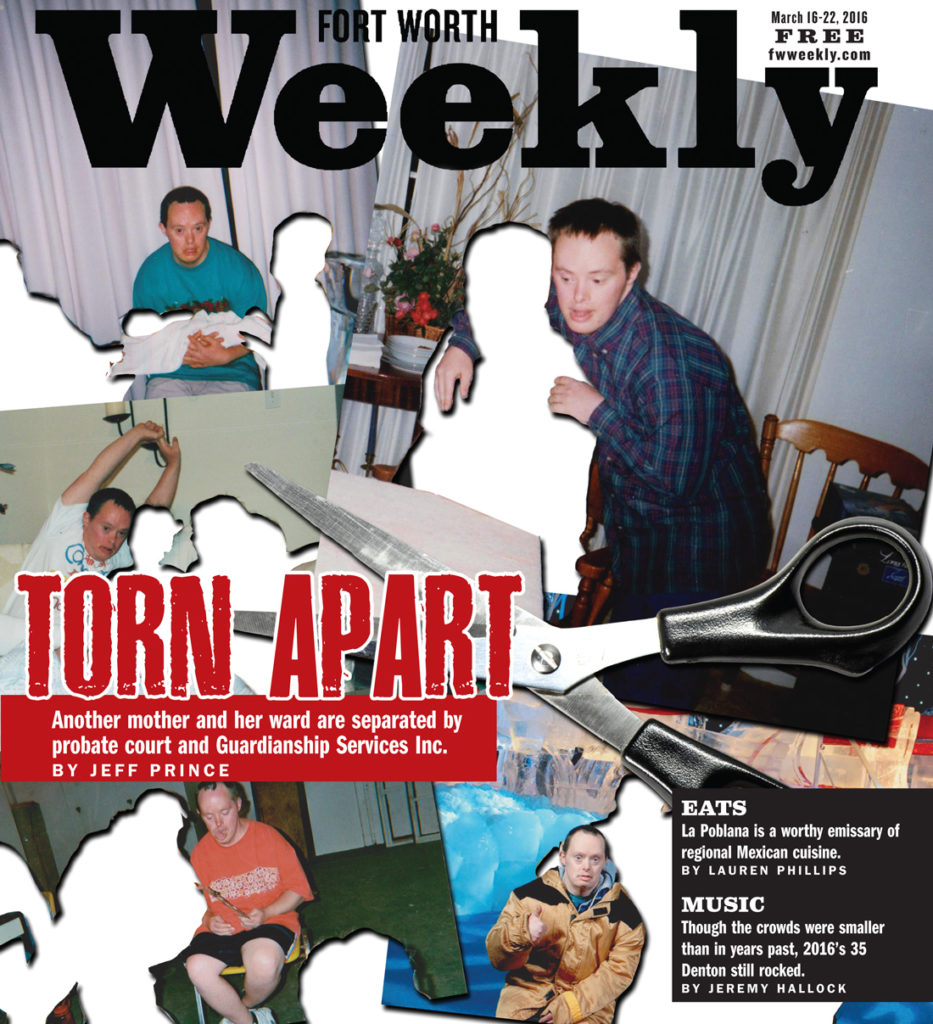
A fun outing to a Fort Worth bingo hall on a pleasantly warm January afternoon was soured after Billy Mittel tripped in the parking lot, took a spill, and scraped his shoulder, legs, and chin. The strawberries and bruises were painful and ugly but not serious. Still, Mittel was moaning in pain. The 53-year-old has Down syndrome and relies upon his guardian of almost 30 years, Sandra Wood, to care for him. It’s a responsibility that Wood savors. She considers Mittel her son. Together they visit the zoo, eat at restaurants with friends almost every day, and stay busy while keeping each other company. Mittel doesn’t speak clearly and relies on simple sign language at times, but he and Wood understand each other well.
“We used to get 10 or 15 loaves of bread and go to Joe Pool Lake and feed the fish,” Wood said. “He loves to go, go go.”
And now he has been taken from her.
The injuries alerted Mental Health and Mental Retardation of Tarrant County. Nurses and probate court investigators and attorneys made home visits. Wood is blunt spoken and can be irascible at times. She is also sweet and giving, a woman who has devoted most of her adult life to caring for a mentally challenged man who requires close supervision. Wood said she had never been cited or chastised by MHMR or any other agency regarding her care of Mittel in 28 years despite regular, unannounced home visits.
Everything changed after Mittel fell. Wood’s overprotective nature might have worked against her.
First, she took Mittel to an Arlington clinic, the First Choice Emergency Room, one of several in North Texas associated with First Texas Hospital. After prescribing an antibiotic and a mild painkiller, the doctor took numerous X-rays all over Mittel’s body, which might have contributed to the concerns of the probate court and MHMR that the injuries were more serious than Wood had described.
Wood’s 47-year-old daughter, Virginia Jefferis, said the doctor took numerous X-rays because of Mittel’s diminished capacity to communicate. “Since he verbally could not say, ‘Yes, that hurt’ or ‘that didn’t hurt,’ the doctor did X-rays,” Jefferis said. “I was glad they did X-rays.”
After leaving the emergency room, Wood took Mittel home. She gave him an antibiotic and pain pill and had him rest on the living room couch so she could watch him from her nearby easy chair. Later, though, she worried that an MHMR inspector might say she hadn’t done enough to treat Mittel, who was still complaining about pain. For a second opinion, she loaded him back in the car and drove to Harris Hospital, where she has admitted herself several times in the past couple of years for blood-sugar issues related to her diabetes.
The hospital staff said that Mittel, whose medical costs are covered by Medicaid, was fine and sent him back home with a stronger pain prescription. Wood said she did not give Mittel any of the new pain medicine because she had already treated him earlier.
The two doctor visits appear to have alerted MHMR. Staffers made a couple of visits to Wood’s house, and a nurse suspected that Wood had over-medicated Mittel and not cleaned his wounds properly. Her report prompted a probate court to remove Wood as guardian and place Mittel in a group home. Wood is no longer allowed to visit him. Probate court judges can move swiftly to remove a guardian and take control of someone’s life. On the other hand, the same judges can move with the slowness of tree sap when it comes to reversing a decision or reestablishing someone’s rights. Wood has tried for weeks to get court officials to listen to her, without success.

Billy Mittel sits on Santa’s knee in 2014. Courtesy of Sandra Wood
“It doesn’t seem legit,” Jefferis said. “It’s so sad. [Mittel] is used to going out to eat every day. They go everywhere. And now he’s in a group home with other Down syndrome people. They don’t do what he’s used to doing.”
Mittel’s biological parents never took him home from the hospital after he was born. He spent his childhood as a ward of the state before meeting Wood.
“I was the only family that [Mittel] has ever had,” Wood said.
The last time Wood saw Mittel, he was signing “home.” The sign involves holding your hands in the shape of a roof, like an upside down V. All these weeks later, Wood still envisions Mittel making that sign and wondering why the only mother he ever knew has disappeared from his life. Wood received $733 a month from social security to care for Mittel but said she doesn’t care about the money.
“I just want him back home,” Wood said.
MHMR and court officials will not talk about the case, citing confidentiality requirements. Officials are required to make judgment calls and, at times, act swiftly. It’s not unusual for probate judges to err on the side of caution by removing someone as guardian without a hearing. Later, they can listen to arguments and change their minds if needed. But that puts the onus on people like Wood, who lives on a fixed income, to hire an attorney and prove he or she is a responsible guardian. Wood says she can’t afford an attorney.
Sometimes agency officials must make tough decisions when guardians grow old. Wood isn’t the same hard-charging woman she was in her 40s when she brought Mittel home. She’s now 71, diabetic, overweight, suffers creaky joints, and relies on a walker. She doesn’t get around well. Nor does Mittel, thus the fall.
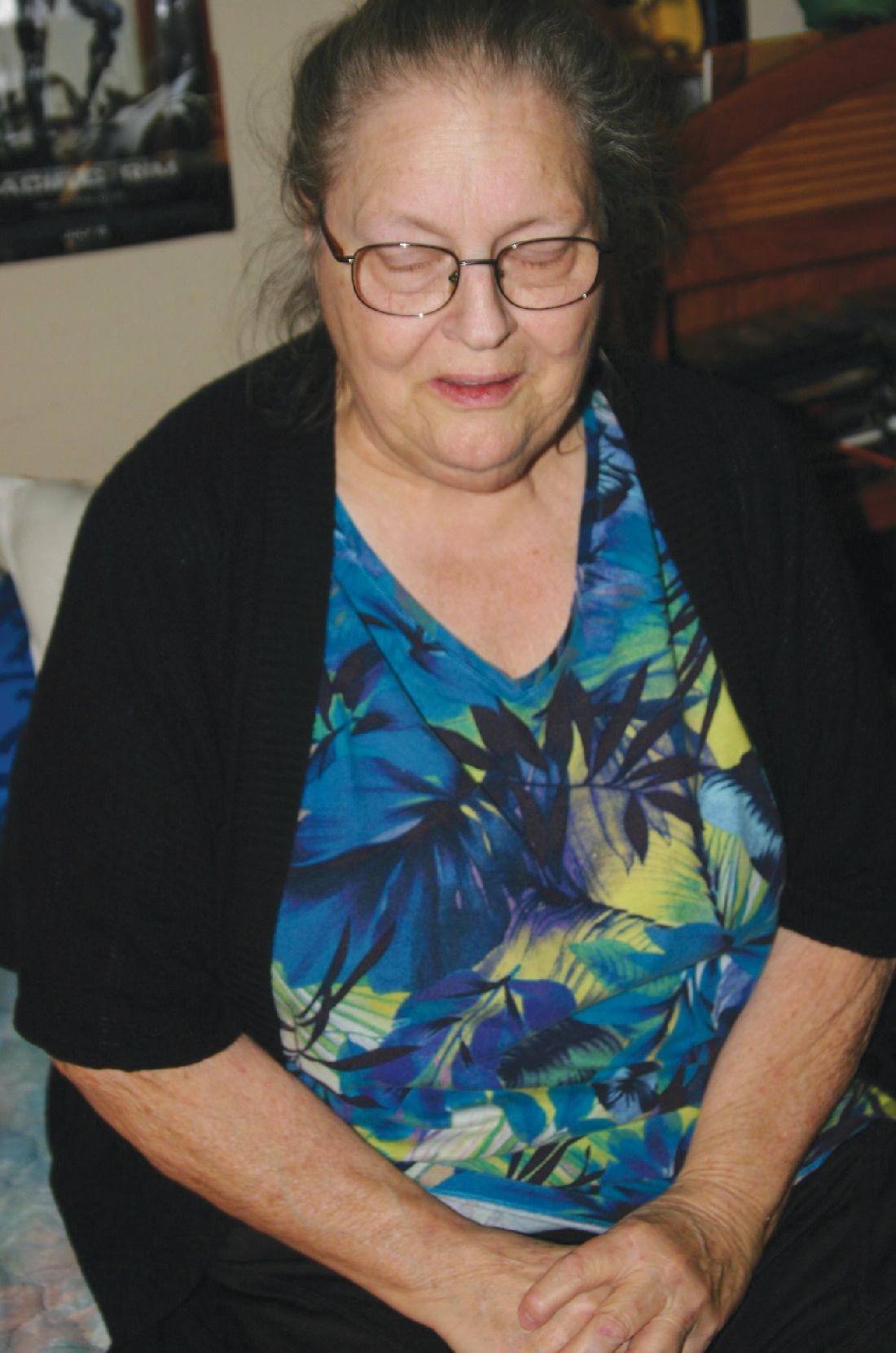
Sandra Wood has been crying for Mittel every day for two months. Photo by Jeff Prince.
Wood has lost 50 pounds from the stress in the last two months. She has been accused of abusing a person she loves with all her heart. She cries often and feels like her son was ripped away from her for no reason.
“Everyone was devastated when this all went down,” Jefferis said. Mittel “doesn’t have an understanding at all. He just knows he’s not home anymore. The way they’ve gone about this is totally wrong. I can’t imagine just taking someone away from their home. My mom did not harm [Mittel], and this has never happened before after all these years. It was an accident. [Mittel] was very well taken care of. I know he’s just as devastated as she is, and I don’t have any answers.”

Monday, April 18, 2016

Guardianship Gulag

Guardianship Gulag

One former nurse was so enraged by Fort Worth’s probate court that she wrote a book about it.
Posted April 13, 2016 by Static in News
A-Breach-of-Trust
Few newspapers have published more stories on probate courts and guardianship cases gone wrong than yours truly. Tarrant County’s probate courts, led by Judges Pat Ferchill and Steven King, hear difficult cases, for sure. But the Fort Worth Weekly has spotlighted numerous instances in which people have been stripped of their rights and removed from their homes with little justification. Associate Editor Jeff Prince has written a dozen stories, beginning with “Saving Katia” on July 2, 2008, and as recently as “Torn Apart” on March 16, 2016. He has described how a powerful system of judges, attorneys, bankers, and care providers are overstepping the limits of decency if not legality.
More and more newspapers nationwide have begun scrutinizing their own probate courts and guardianship systems. In Texas, the Austin American-Statesman, Houston Chronicle, and San Antonio Express-News are providing the best coverage among mainstream dailies. A San Antonio-based grassroots coalition of activists known as G.R.A.D.E. is relying on social networking to build up their numbers and push for probate reforms. They and other people make frequent trips to Austin to speak at legislative hearings. And why shouldn’t they? Ferchill and other judges attend public hearings to speak in favor of laws that give them more power to tear apart families in the name of greed.
The Fort Worth Star-Telegram has been more of a cheerleader to the courts than anything. The paper has published stories depicting families who are happy about the court intervening in sticky situations. The paper has written puff pieces about judges. That’s fine –– good things do happen in probate courts sometimes. But the paper has pretty much ignored the questionable decisions being made on a regular basis inside those courtroom walls.
You know who isn’t ignoring Tarrant County’s guardianship system any longer? Susan Hodges.
Who is she?
Well, there is no reason you would know her. Until recently, she was just a retired nursing home administrator living the slow and easy life in Fort Worth. But something nagged at her. No, it was more than nagging. She has been haunted for years. Her conscience had declared war on her and was using razor-barbed guilt as its primary weapon of torture. Hodges worked at several nursing homes over the years, but it was her time spent in a Fort Worth facility that created her many sleepless nights. Her dealings with the local guardianship program showed her that the judges, attorneys, and caseworkers were more interested in power, control, and money than in doing what’s best for people.
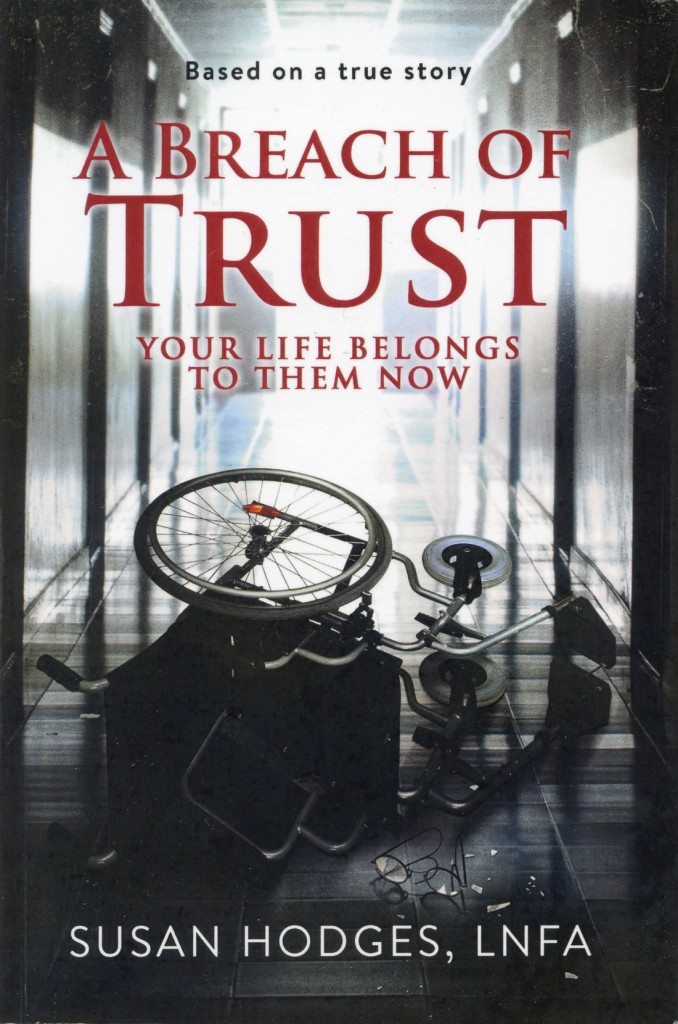
Hodges felt guilty about being unable to protect some of her nursing home residents from decisions made by the local judges and court-appointed lackeys. So she wrote and self-published A Breach of Trust: Your Life Belongs to Them Now, her book “based on a true story” about dealing with the local probate courts.
“It took me this long to write it because I’m scared to death of that court,” Hodges said. “All the other nursing homes I worked in, none of this happened. There is something with [Fort Worth’s] guardianship program that I don’t understand. I don’t want to deal with these people again.”
Hodges based her book’s stories and characters on real events and people, although she used fictitious names. Some characters were composites of different people. But the nuts and bolts of the story were true, she said, including the part about the local guardianship system being a nightmare for people who have the misfortune of becoming elderly and vulnerable. In the book, the author connects heavy-handed tactics of the guardianship system with the premature deaths of patients. And while the first-time author is no Ken Kesey, her book is comparable to One Flew Over the Cuckoo’s Nest in the outrage it inspires against institutional abuses.
Tarrant County guardianship administrators would take control of patients via the probate judge’s rulings. Then, if nursing homes or other institutions did not do exactly as told, the guardians would move the patients somewhere else, Hodges said.
“The courts are very ignorant about what a nursing home is all about,” she said.
Nursing homes become small communities with groups of people forming deep friendships that, in some cases, improve their physical and mental wellness. The probate court seemed to consider money first when making decisions about when and where to move clients, she said. This is hard on old people, who get used to nurses, food, and surroundings. They become close to one another.
“The residents usually start loving the home, and they’re proud of it,” she said.
She recalled supervising a nursing home that was adjacent to another nursing home, and the residents in both homes acted like students at rival high schools, competing with each other to be the best.
But the probate court sees the residents as commodities rather than human beings, she said.
“It’s very gut-wrenching,” Hodges said.
Old people can die quickly when they’re ripped away from their community. Hodges saw it happen. That’s what haunted her the most.
“I’m supposed to be protecting these people,” she said. “I never took another court-appointed [client] from Fort Worth again.”
Later, she left Fort Worth and worked at nursing homes in rural areas.
“You don’t see this in rural areas,” she said.
Why not?
Well, people in rural areas know one another. They run into each other at dinner, at school, at church. If a judge tries to force people into guardianship cases to remove their rights and take control of their lives and bank accounts, every person around hears about it. That judge is unlikely to be reelected.
Tarrant County has almost two million people, making it much easier to destroy lives in anonymity.
Hodges said she complained to the Texas Department of Aging and Disability Services, the agency that licenses and regulates care providers.
“I was told, ‘Hands off.’ DADS does not get involved in anything with the court,” she said. “I got no answers. Everything should be about the residents and not about us and our agendas.”
She wrote the book to warn people about the guardianship program while assuaging her guilt.
“I’m not an author,” she said. “I never intended to write a book. But that’s how much this affected me. This program needs scrutiny. They do what they want. They are protected by the judges. We’re at their mercy.”
The afterword of Hodges’ book credits articles written by Prince as an inspiration for her book. “Check them out,” she writes, “and see the real faces of the folks who have been sucked up by this scheme.”
The book is available at Amazon.com and at Hodges’ website: www.abreachoftrust2016.com.

Thursday, April 9, 2015

Will Austin continue allowing lawyers and bankers to get rich off Texas’ elderly?

Gavel Guardians

Will Austin continue allowing lawyers and bankers to get rich off Texas’ elderly?
3
Posted April 1, 2015 by Jeff Prince in News
Dorothy Luck is one of only a few to battle her way out of guardianship — but not before hundreds of thousands of dollars were spent. Jeff PrinceDorothy Luck is one of only a few to battle her way out of guardianship — but not before hundreds of thousands of dollars were spent. Jeff Prince
Residents and activists are looking on with keen interest as lawmakers in Austin are discussing new bills that could give probate judges even more power to place people under guardianship. For years, probate judges in Tarrant County and across the country have used far-reaching powers to strip vulnerable residents of their rights and their money. Tarrant County’s Guardianship Service Inc. is designed to protect vulnerable people’s assets. But what began in the 1980s as a way to provide volunteer guardians for the elderly evolved into a tight-knit and powerful system of professional probate judges, attorneys, bankers, investigators, and court-appointed guardians who can take over people’s lives, place their money in managed trusts, and relentlessly bleed the estates dry.
A growing number of disgruntled residents are striking back.
“You work all your life just to have these buzzards pick your estate apart,” said Michael Easton, an activist who agitates probate courts on behalf of people placed under guardianship in questionable cases. “That’s not right.”
The probate judges hear the groundswell of discontent. Rather than accept reforms –– or push for them –– some are digging in their heels. More than two dozen guardianship-related bills have been filed in the 84th legislative session currently under way. Critics say most of the bills appear to be filed by politicians on behalf of attorneys who profit most from the system.
“They steal old people’s money and parcel it out among themselves,” Easton said. “Family members are left watching on the sidelines. By the time the person dies or is no longer ‘incapacitated’ –– quote unquote –– there’s no money left.”
Easton, a paralegal and private arbitrator and mediator, worked with defendants in two guardianship cases in recent years. Seeing the amount of power that probate judges wield and their willingness to abuse those powers to gain access to people’s bank accounts convinced him the system needed changing. He has since joined many other activists, including some from Fort Worth, in attending legislative hearings in Austin to push for reforms.
Easton attended a hearing in 2013 where several probate judges, including Tarrant County’s Pat Ferchill, spoke out against proposed reforms. A bill intended to add transparency to probate courts was blasted by judges, who worried it might clog up their systems.
“Do you think they want to repair the system?” Easton told Fort Worth Weekly back then. “They are happy with the way it is. Right now there is no oversight, and they can do whatever they want.”
Rep. Elliott Naishtat has written two dozen guardianship-related bills since 1993, many of them brought to him or suggested by Probate Court Judge Guy Herman of Travis County, Naishtat said.
Naishtat said his bills have added safeguards to wards and families and enabled probate courts and judges to better determine if a guardianship is necessary.
“I firmly believe that protecting the elderly and people with disabilities from abuse, neglect, and financial exploitation should be a priority,” he said. “I am very proud of the work I have done with respect to the guardianship-related needs of many of our most vulnerable citizens.”
Critics say legislators who write bills to please judges are part of the problem –– but the critics save their harshest words for judges such as Herman and Ferchill, who lobby lawmakers for legal changes.
“Naishtat is in Herman’s pocket,” Easton said. “Whatever Herman wants to do, he drafts it and sends it to Naishtat, who sponsors it. Ferchill testified that he wanted … things passed that would benefit the probate judiciary. How can this man be a judge when he’s down here legislating? Judges are supposed to interpret the law and make decisions on that law, but they’re not supposed to have any say in writing the law. Proactive judges cannot hear cases.”
Probate courts get involved after someone reports a person at risk due to mental or physical incapacitation. The guardianship system was designed to prevent relatives or others from taking advantage of vulnerable people. The Weekly has profiled several people forced into guardianships unwillingly and has fielded phone calls from at least 50 other local families accusing the courts of initiating guardianships simply to seize assets and parcel money out to lawyers, bankers, and others.
Some residents have been stripped of their right to hire an attorney, leaving them unable to fight back. Consider Dorothy Luck’s situation (“Luck for Dorothy,” March 19, 2014): Several of her relatives sued her after a disagreement about money. The attorney working against Luck was a familiar face in the probate courts, and he threatened to initiate a guardianship case against her if she refused to settle. Luck wouldn’t budge. She’d never heard of a guardianship case and was unaware of the incestuous nature of the system.
Before long, a guardianship referral appeared in Probate Judge Steven King’s court expressing concern about Luck’s mental health. Luck’s relatives protested. They said Luck wasn’t incapacitated, simply stubborn. They didn’t want her shackled with guardianship. But attorney Monika Cooper of the ShannonGrace law firm submitted a guardian referral. She described herself on the referral as being Luck’s friend, although Luck said they’d never met at the time.
King then appointed Lisa Jamieson, an attorney with whom Cooper works, to represent Luck, putting, in effect, the enemy in charge of Luck’s defense. Luck’s doctors examined her and declared her mentally competent. So King appointed one of his familiar courtroom experts to examine her and deemed Luck partially incapacitated. That was enough for King to put her in guardianship and place her money in a trust. Regular withdrawals began occurring to pay for the various attorneys, guardians, and experts appointed by King. Before long, half a million bucks had disappeared.
In another case, Ferchill held a hearing to determine whether Kathie Seidel was fit to care for her adopted daughter (“Saving Katia,” July 2, 2008). But Seidel wasn’t informed of the hearing and didn’t get to defend herself. Ferchill placed her daughter under guardianship and eventually barred Seidel from visits. To appeal the decision, Seidel would have to hire a private attorney and also put up thousands of dollars in a bond at the court’s insistence. She was effectively priced out of justice. She’s still fighting to free her daughter from guardianship.
“The average citizen has no idea this is happening until they’re roped into the system and can’t get out,” she said.
Seidel and others affected by court decisions formed Guardianship Reform Advocates for the Disabled and Elderly (GRADE) and began trekking to legislative hearings in Austin. That growing scrutiny is prompting judges and legislators to come up with new laws to strengthen their hands, Seidel said.
“Our small group [GRADE] and another group in Austin, the Guardianship Reform Supported Decision Making, have been making headway in showing the corruption of the courts, and so now they’re trying to get laws into effect,” she said. “I assume there is this rush to get laws in place so the reformers can’t have as much of an effect.”
More than two dozen bills related to probate courts have been filed so far. One bill gives judges more power to insist that defendants put up expensive bonds before appealing decisions. Another would allow judges to more easily sidestep having to recuse themselves. And yet another would give judges access to a person’s financial records before guardianship had been declared.
“The fallout is that they will have carte blanche to look into people’s finances, determine who has the most money that they can get access to, and then put them under guardianship,” Seidel said.
Senate Bill 1369 is one of the few that activists deem as friendly to the people rather than the probate courts. Sen. Judith Zafrinni, a Democrat from Laredo, introduced the bill that would require better reporting of fees earned by probate attorneys. Most critics say the ease with which attorneys corral people into guardianships and then charge them fees could be somewhat diminished if the information was better reported.
GRADE Director Debbie Valdez hopes to see that bill passed. Still, she’s pored over the various bills for weeks and said all but a few would empower judges at the expense of defendants.
“The person in charge of protecting a ward … is the person who appointed the ward, and that’s the judge, who becomes the ultimate guardian,” Valdez said. “We are creating a system where people who provide guardianship services are immune from civil liability. If we don’t fix this, we’re all going to be victims of it.”

Thursday, July 4, 2013

Fighting Financial Abuse

Editor's note: What good are "meaningful" laws when a crooked court system as the Probate Court of Cook County, Illinois exists? Why does a judge remove a business woman, mother of 7 children as guardian of her 99 year old mother and replaces this capable person with an easily manipulated mentally disabled relative? Lucius Verenus, Schoolmaster, ProbateSharks.com


Fighting Financial Abuse
Crime, Families, People
Fighting Financial AbuseGov. Neil Abercrombie signs five bills as part of the Kupuna Care Package
The frustrations of financial abuse for the elderly received help from the Governor today.
Gov. Neil Abercrombie signed Senate Bill 102 to amend a section in the Hawai`i Revised Statutes relating to the reporting of elderly financial abuse. The most significant change is for financial institutions to report possible abuse to state human services as well as county police. The original statute required reports only to human services. Immediately after receiving a report, police must begin a criminal investigation.
"It's gonna fill a gap that's really needed," Honolulu Police Department Lieutenant John McCarthy said. "We're seeing an explosion in elder financial fraud cases. It's really sad because these people lose real dollars. There's no one to replace it. There's nowhere to replace it. We have to get out to these complaints immediately to try and track the money and save or recover what's there."
"WE'RE SEEING IT EVERYWHERE"
After a case gets reported to the county police department, they then contact the prosecutor's office to work on the report and take it to trial. Deputy Prosecuting Attorney Scott Spallina explained that these fraud incidents are not only originating in Hawai`i.
"Unfortunately we're seeing it everywhere," Spallina said. "It's not just a local crime. We have criminals coming from the mainland praying on our local victims here - our local kupuna - and taking the money out of state. It'd be one thing if they committed crimes here and the money stayed here but no, they're taking it out of state - not only to the mainland but also Nigeria - other countries where the law is not as strict as they are here."
FREEZING THE FAMILY
McCarthy said that although the elderly may be the victim, it still affects others.
"This crime not only injures the elderly person but the families that are involved," McCarthy said. "The families become victims. They have to come in and care for these people and they lose potentially what was theirs to inherit."
And the message is to report all incidents in a timely manner.
"Time is money," Spallina said. "The longer it takes for a crime to be reported, the more money the victim loses. For the banks to be able to call the police immediately, they're literally saving thousands of dollars of the victim's money."
WHY THE ELDERLY?
McCarthy insists that the message is for the general public but explains why the elderly are targeted more frequently.
"Our kupuna grew up trusting people," McCarthy said. "They grew up in the 1960s - the post World War II era -  happy days. Times have changed."
"Elder abuse is the most under reported crime there is because our victims are too embarrased to report it," Spallina said. "No one's going to pass judgment on you. If you're a victim of a crime, please report it to stop that criminal from victimizing others."
DRAWING A COMPARISON
One of the most high-profile types of financial fraud was the infamous "Stevie Wonder Blunder" that ripped off $200,000 from the University of Hawai`i last summer. This, Spallina said, was a prime example of how this type of scam can hit anyone.
"That's another example of how smart people can get taken advantage of," Spallina said. "We're talking about UH officials being taken for hundreds of thousands of dollars. Just because you're a victim of a crime doesn't mean you're stupid - doesn't mean you deserve that. It just means that the criminals are smart. They're smooth. They don't dress like our stereotypical criminal."
HOW TO PREVENT IT?
Financial fraud cases can involve phone calls, email messages or face-to-face interactions - but Spallina has one message for Hawai`i residents to protect themselves from these incidents.
"If a deal sounds too good to be true, it's too good to be true," Spallina said. "People need to realize that they aren't that lucky. They're not lucky to win a secret lottery that they never entered. They're not lucky to have a prince from Nigeria calling them up to transfer all these monies. They're not lucky to get a construction job that usually costs thousands of dollars for only a hundred dollars."
To report possible elder financial abuse, contact Adult Protective Services at 808-832-5115.
This bill was one of five signed by the Governor today as part of their Kupuna Care package. Those bills were: HB529 (Relating to Care Homes), HB398 (Relating to Human Services), HB120 (Relating to Health) and SB106 (Relating to Aging). 
Lt. John McCarthy (next to Governor) of the Honolulu Police Department is part of the Criminal Investigation Division.
Crime, Families, People