Showing posts with label whistleblower. Show all posts

Wednesday, February 3, 2016

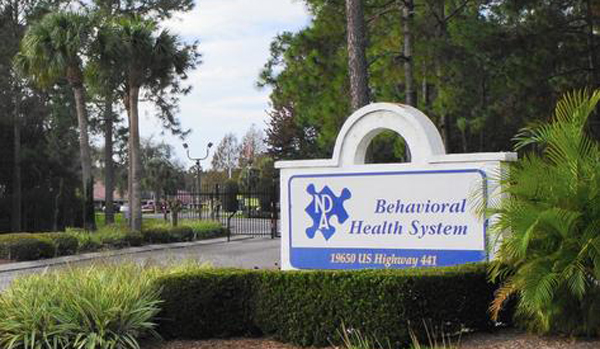
Florida Psych Facility To Close Amidst Patient Abuse Allegations

Florida Psych Facility To Close Amidst Patient Abuse Allegations
national-deaf-academy-nda
“We’re glad that UHS is responsibly closing its NDA facility in Florida. It should recognize that psychiatric treatment is bad business and close its behavioral sector to prevent more patients being put at risk.” — Jan Eastgate, President of CCHR International
As private psychiatric hospital chain closes Florida facility, CCHR calls for tougher criminal penalties against those committing patient abuse
By CCHR International
January 18, 2016
Universal Health Services, a company with 21 psychiatric facilities under federal investigation for potential billing fraud, announced the closure of its National Deaf Academy (NDA) Behavioral Health System in Mt. Dora, Florida. NBC News reported the NDA is closing after being “hit with abuse allegations,” with many of these investigated and reported by NBC and other organizations. At least 10 patients at NDA had complained about abuse, three families filed lawsuits and the FBI was also investigating, NBC reported.[1]
The NDA CEO Greg Sizemore said when the remaining 34 patients are discharged from the 120–bed residential facility, NDA will be “temporarily closing.” However, Citizens Commission on Human Rights International (CCHR), which has investigated NDA and dozens of other UHS behavioral facilities around the country, say the government needs to ensure that the property never reopens as a psychiatric or behavioral center.
NDA is one of five Florida UHS behavioral centers that is under investigation by the Federal Department of Justice and the Office of the Inspector General. In March 2015, UHS’s headquarters in Pennsylvania was also added to the investigation.[2] The other Florida facilities are Central Florida Behavioral Hospital, River Point Behavioral Health, Wekiva Springs Center and University Behavioral Center.

nda-kyle-carol-300
National Deaf Academy whistleblowers Kyle Gilrain and Carol Savage, say they personally saw bruising, black eyes and chokeholds at the facility in 2012, but they felt pressure from the former CEO to cover it up.
NBC reported that two former NDA employees said that they personally saw bruising, black eyes and chokeholds at the facility in 2012, but they felt pressure from the facility to cover it up.
CCHR has filed complaints against NDA based on whistleblower allegations, resulting in the Florida Agency for Healthcare Administration (ACHA) inspecting and citing the facility for inadequacies in January 2013. In November 2015, CCHR’s chapter in Florida also filed complaints with legislative agencies citing the need for greater oversight of UHS psychiatric facilities: “Patient suicides, restraint deaths, falsifying records” and patients “sexually assaulted are just some of the abuses in UHS behavioral facilities that state authorities or the Centers for Medicare and Medicaid Services (CMS) have investigated,” CCHR Florida president, Diane Stein wrote.
Plagued by Abuse Allegations
On January 13, CBS 13 News reported that UHS had withdrawn plans to build a 102-bed psychiatric facility in Rocklin, California. Local residents objected to the plan and CCHR also filed complaints to local officials questioning how UHS could open a psychiatric center while under Federal investigation.
Media reported on January 11, 2016, that investigators from the Massachusetts Department of Mental Health found UHS’s Pembroke Hospital contributed to the death of a woman in her 20s within three days of being admitted to the psychiatric facility in August 2015. While the coroner found the girl died of natural causes, investigators determined that Pembroke Hospital staff violated their own policy when they left the woman alone in her room after finding her unresponsive and calling a ‘code blue’ medical emergency. By the time hospital staff took any action, the patient already “showed obvious signs of death,” according to the state reports.[3]
In 2007, the state had issued a scathing report about patient mistreatment at Pembroke Hospital, following a seven-month investigation into complaints from both staff and patients.[4]
Christine Griffin, the executive director of the Disability Law Center of Massachusetts, called for tougher consequences for hospitals that endanger or mistreat patients.[5] CCHR agrees, saying that the culture of abuse found in UHS behavioral centers requires criminal penalties, funding cuts and closures where the abuse is systemic.
  • In 2013, an employee at the Milton Girls Juvenile Residential Facility, Florida, was sentenced to jail after being caught on camera slamming a young girl at the facility into a wall.[6]
  • In 2013, Lennox Seepersad, a mental health technician with The Vines Hospital in Florida was charged with felony abuse of a 13-year-old resident he twisted the arm of causing a spiral fracture.[7]
­­
  • In April 2014, Ernest Parker, a former mental health technician at the Milton Girls Juvenile Residential Facility in Florida was sentenced to 25 years in prison for three counts of sexual misconduct with residents.[8] Milton Girls Juvenile Residential Facility in Florida closed in 2012 following incidents of staffers being criminally charged with abusing teens.
  • On September 9, 2015, five plaintiffs filed a lawsuit at Cook County Court against Rock River in Illinois, alleging sexual abuse and rape by staff. One alleged staff “intentionally administered psychotropic drugs which they used to keep her in a semi-conscious state so that she could be more easily manipulated and sexually abused.”
“We’re glad that UHS is responsibly closing its NDA facility in Florida. It should recognize that psychiatric treatment is bad business and close its behavioral sector to prevent more patients being put at risk. In lieu of this, tougher fines, funding cuts and criminal penalties should be leveled at any for-profit psychiatric facility that continues to abuse patients,” Jan Eastgate, president of CCHR International said.

CCHR is a non-profit, public benefit organization.
References:
[1] Aliza Nadi, “National Deaf Academy, Hit with Abuse Allegations, Is Closing,” NBC News, 15 Jan. 2016, http://www.nbcnews.com/news/us-news/national-deaf-academy-hit-abuse-allegations-closing-n497516.
[2] “Feds widen fraud probe of Universal Health Services to include headquarters,” Healthcare Finance, 1 Apr. 2015, http://www.healthcarefinancenews.com/news/feds-widen-fraud-probe-universal-health-services-include-headquarters.
[3] Chris Burrel, “State report criticizes Pembroke Hospital,” Wicked Local news, 11 Jan 2016, http://duxbury.wickedlocal.com/news/20160111/state-report-criticizes-pembroke-hospital.
[4] Op. cit., Chris Burrel, “State report criticizes Pembroke Hospital.”
[5] Ibid.
[6] Kaitlyn Ross, “Local family says they lived health care nightmare,” First Coast News, 2 May 2013, http://www.firstcoastnews.com/story/news/local/2014/01/17/4600179/.
[7] Statement of Deficiencies and Plan of Correction, Florida Agency for Health Care Administration, The Vines, 20 Feb 2013; April Warren, “The Vines Hospital faces challenges,” OcalaStarBanner, 31 Jan 2015, http://www.ocala.com/article/20150131/ARTICLES/150139951?template=printpicart.
[8] “Former med tech gets 25 years in sex case,” Pensacola News Journal, 16 Apr 2014, http://www.pnj.com/story/news/2014/04/17/former-med-tech-gets-25-years-in-sex-case/7809815.

Wednesday, September 2, 2015

Memphis VA retaliates against Veteran who exposed neglect

Memphis VA retaliates against Veteran who exposed neglect


by -
0 605
Despite a CDN expose on poor care at the Memphis VA, the neglect of wounded warriors - quad and paraplegics continues
image: http://commdiginews.wpengine.netdna-cdn.com/wp-content/uploads/2015/08/memphis-va-hospital-700x422.jpg
http://www.memphis.va.gov/
MEMPHIS, Aug. 28, 2015 – The patient who leaked shocking videos showing paralyzed veterans left unattended at the Memphis VA says the only change since the video is that the hospital is now retaliating against him.
Last week, CDN broke  the news that paraplegic and quadriplegic veterans at the Memphis VA are left alone while nurses attend staff meetings.
The story was first released on CDN, and then was picked up by the Fox News Channel, featured on Fox & Friends as well as on its website, sparking national outrage about lack of care at the VA.


Instead of rectifying a bad situation, hospital staff appears to have taken punitive action against the source of the video. Staff placed the patient, whose identity CDN is protecting for safety concerns, on bed rest after they speculated he could be responsible for the video.
On bed rest, he is not allowed to move from his bed. “Before the videos, I was able to get up for an hour or so,” he told CDN. “I don’t understand why I can’t get up for an hour. It (moving around) helped with my mental health and with my overall outlook, I was able to go outside and get fresh air.”
The source noted, however, that there has been no change in terms of leaving patients unattended during staff meetings, which take place three times a day. “So far as I know it’s still the same thing. I’m in a room where I can actually see the front desk from my room.”
 
00:27
00:58
 
00:00
Loading ad
00:00
Willie Logan, the Memphis VA’s press representative, told CDN in its last story that a nurse was always at the nurse’s station and patients only needed to push a button to reach a nurse.
The source disagrees. He noted, “It’s apparent from the video that there is not somebody at the nurse’s station at all times. The room where they have that meeting is not a patient’s room so I’m not sure if they can hear the call.”
On the foxnews.com article, several commenters pointed out that a quadriplegic, someone paralyzed from the neck down, isn’t able to push a button.
A follow-up email to Logan on this issue was left unreturned, but the patient said shortly after the email was sent, several nursing managers who had never been in the ward before were working in the ward. “I’ve seen people in here I’ve never seen before,” he said. “They’re flipping beds and cleaning under mattresses and everything.”
Following the exposure, Paralyzed Veterans of America released a statement condemning the deplorable conditions. “This video speaks to a need that our organization has stressed to VA leaders, Congress and the public for quite some time: VA needs more nurses in specialized care services like spinal cord injury centers.”
The patient said his current care is indicative of the quality of care at the Memphis VA for years. “The treatment was so bad that I made up my mind not to come back,” he said of his experience four years ago.
Because of the severity of the injury, he said he was forced to get treatment at the Memphis VA because he didn’t have proper insurance for treatment outside the VA system.


Sean Higgins, the whistleblower who brought these videos to the attention of CDN, said this case is a microcosm of a bigger problem at the Memphis VA. “The situation in the Memphis VA has been out of hand for quite some time. To care for those who shall have borne the battle is clearly not the agenda at the Memphis VA,” Higgins said in a text message to CDN. “We veterans see the neglect from management that is filtered down to the staff that actually cares for these veterans. We continue to see more of the same: deny, delay, and hope you die before they have to pay.”
—
After this article was published, The Memphis Veterans Affairs provided the following response:
The Memphis Veterans Affairs (VA) Medical Center adheres to very strict privacy laws which prohibit sharing personal, protected information of our Veterans, therefore we are unable to speak to any matter that would compromise an individual’s right to privacy.  Care provided to our patients is based on individual health care needs.
The Memphis VA Medical Center’s Spinal Cord Injury Unit (SCI), utilizes Environmental Control Unit (ECU) technology which is installed on the bed of every SCI patient, and allows patients to call the unit nursing staff regardless of their physical capabilities. Patients, based upon their level of ability, can utilize voice activation, touch screen, sip n’ puff straws, switch controls, or even eye gaze to operate the ECU technology.  Activating the call button by one of the aforementioned methods triggers a sound alert throughout the spinal cord unit and a light over the patient’s doorway.  Nursing staff respond appropriately to calls for assistance. The Environmental Control Units allow patients to control their surroundings, and also to control various media such as eBooks, the Internet, Facebook, Skyping with their families, and playing computer games, among other features too numerous to mention.
To ensure continuity of care, the SCI charge nurse spends five to ten minutes every day at the beginning of each shift with incoming nursing staff to share the most recent information about patients on the SCI unit. All other staff are available on the ward caring for patients.  SCI patients require very personal, hands-on care and it is rare that nurses have frequent opportunity to sit or stand at the “nurses station” – they are mostly attending to patients in the patient’s room. At no time is our SCI unit vacant of staff.
The Memphis VA Medical Center was the first hospital in the area, public or private, to install this high-tech ECU equipment. The specially trained SCI staff at Memphis VA played a key role in developing these units based upon their professional observances and desire to give Veterans the most patient centered care possible

Read more at http://www.commdiginews.com/life/memphis-va-retaliates-against-veteran-who-exposed-neglect-47533/#3yAiDEA8TrIyw3D8.99

Monday, October 20, 2014

Inspector sees state action as retaliation

Inspector sees state action as retaliation


A state worker who inspects assisted-living facilities said his bosses placed him on paid administrative leave Tuesday in retaliation for speaking to the Globe and other media about the Patrick administration’s failure to investigate serious incidents at assisted-living centers.
Peter Antonellis, a compliance officer at the Executive Office of Elder Affairs, said he was handed a letter saying he is being investigated for multiple instances of “potentially inappropriate and unprofessional conduct.” He said he was asked to gather his personal belongings and leave the office.
Continue reading below
Antonellis, 64, said that when he asked supervisors what conduct had triggered the action, he was not given details.
“What really makes my blood boil is my colleagues and I have been complaining for the last six years about this program and not once has the department gathered us in a room to address our complaints,” Antonellis said.
A Globe story last month quoted Antonellis about his concerns regarding the agency’s oversight of assisted-living facilities. He said that the office has just two ombudsmen to handle thousands of complaints that pour in each year involving assisted-living residences and that the agency did not have the staff to regulate the apartment-like facilities for older adults.
Antonellis also told the Globe he had repeatedly alerted his superiors that reports of serious incidents at such facilities were languishing for weeks or months at the agency and that no one seemed to be analyzing them for patterns pointing to larger issues.
Two days after that story appeared, state regulators acknowledged during an Assisted Living Advisory Council meeting that they are still working out bugs in a year-old computerized data-collection system. That system does not yet record the consequence of incidents at the state’s 222 assisted-living residences, nor actions taken by the facilities or state regulators to correct problems.
Antonellis said he intends to hire a lawyer to fight the state’s action.
Patrick administration spokesman Alec Loftus said in a statement that Antonellis “has been placed on paid administrative leave while we investigate a potential health information privacy violation.”

Kay Lazar can be reached at Kay.Lazar@globe.com.

Thursday, October 10, 2013

SSA whistle-blowers in attorney-judge scheme testify about harassment

SSA whistle-blowers in attorney-judge scheme testify about harassment


Current and former Social Security Administration employees testified Oct. 7 that they were persecuted and harassed for speaking up about alleged collusion between a disability lawyer and a judge.
"Management has been allowed to harass, intimidate, oppress, stalk, discipline, ostracize, monitor and make my life as miserable as possible for the last 7 years," said Sarah Carver, a senior case technician at the SSA's regional Office of Disability Adjudication and Review in Huntington, W.V., before the Senate Homeland Security and Governmental Affairs Committee.
According to a report from the committee, David Daugherty, an administrative law judge at the SSA office in Huntington, colluded with Eric Conn, an attorney in Stanville, Ky., to approve at least 1,800 claimants for disability benefits. The bank records of Judge Daugherty and his daughter contain $96,000 in cash deposits that he has refused to explain, while Conn received more than $4 million in attorney fees from his SSA cases.

Federal IT Priorities: Top executives Look to 2013 and Beyond

In a recent survey on Federal IT Reform, Senior government IT executives laid out their vision for the coming year, detailing challenges and identifying priorities. To read more about these timely results click here to download the summary today.
Sign up for our FREE newsletter for more news like this sent to your inbox!Located in a town of 500 people, Conn's firm was the third highest paid disability law firm in the country thanks to its SSA fees, the report says.
Carver, who still works at the SSA office in Huntington, said at the hearing that it was not difficult to observe the scheme between Conn and Daugherty. "It was done in such openness," she said.
Daugherty, who has retired from SSA, personally assigned himself Conn's cases, holding up to 20 hearing for his clients in a single day, while most judges held 15-20 hearings in an entire week. He approved virtually all of them, "in assembly-line fashion," the report says. Other judges approved disability benefits in about 60 percent of cases.
Jennifer Griffith, a former master docket clerk at the SSA office in Huntington, noted at the hearing that judges are not supposed to be involved in choosing cases, in order to avoid favoritism. She called the proceedings for Conn's clients "sham hearings."
Griffith testified that when she discovered the improper docketing of cases, she thought her supervisors would be glad to hear that she had found the issue and could correct it. Instead, she said, she was persecuted.
"At one point, my supervisor would time every action I took during the day, including how long I spent in the bathroom," she told the committee.
She filed a complaint with the SSA office of inspector general in 2009, after she had left the SSA, but was not contacted until 2011, she said.
Carver testified that she was followed by a private investigator and that former co-workers had been fired for their associations with her. "I have suffered tremendously," she said.
"Where is the accountability in this agency? Why does the agency promote and reward management for this activity?" she asked.
Griffith said that SSA management had incentives to complete large numbers of cases and not enough safeguards to prevent abuse.
The report echoes that assertion, citing an SSA hearing backlog plan that "focused on moving high volumes of cases through the [administrative law judge] level quickly. Numerous ALJs and other SSA employees told the Committee that this plan created significant pressure to move cases as fast as possible."
Conn's firm had doctors sign pre-filled forms, which often contained information that conflicted with other case files belonging to the same claimants.
Sometimes, identical medical evidence was used for multiple claimants.
Conn declined to cooperate with the report and invoked his Fifth Amendment right to avoid self-incrimination at the hearing.
Judge Daugherty was also slated to appear at the hearing. Sen. Tom Carper (D-Del.), the committee chairman, said that Daugherty had left the hearing before he was called to testify, despite having been subpoenaed.
For more:
- go to the hearing webpage (webcast available)
- download the committee report, "How Some Legal, Medical, and Judicial Professionals Abused Social Security Disability Programs for the Country's Most Vulnerable: A Case Study of the Conn Law Firm" (.pdf)
Related Articles:
Federal air marshal wins appeal in whistleblower case
President Obama issues intelligence whistleblower protection directive


Read more: SSA whistle-blowers in attorney-judge scheme testify about harassment - FierceGovernment http://www.fiercegovernment.com/story/ssa-whistle-blowers-attorney-judge-scheme-testify-about-harassment/2013-10-08#ixzz2hKCMco1r
Subscribe at FierceGovernment

Friday, May 17, 2013

Illinois Whistleblower Act — 740 ILCS sec. 174 et. seq.

Illinois Whistleblower Act — 740 ILCS sec. 174 et. seq.

by jmdenison
One of the things that people have brought up is that while I am reporting on corruption and attorneys and judges acting badly, many of you have written that the Illinois Whistleblower Act should apply to attorneys with respect to the ARDC and government agencies.
YOU ARE ALL BRILLIANT!
I was reminded of this because the ARDC asked me to draft up a new Answer to the January 8, 2013 complaint against me, and I was wondering what I should put at the end of it as my "prayer for relief" against the ARDC and powers that be.  The Whistleblower Act came to mind so I  am publishing it here.
Just change a few words and it will apply to attorneys who report on corruption and any Illinois government agency.
CIVIL LIABILITIES
(740 ILCS 174/) Whistleblower Act.
(740 ILCS 174/1)
Sec. 1. Short title. This Act may be cited as the Whistleblower Act.
(Source: P.A. 93-544, eff. 1-1-04.)
(740 ILCS 174/5)
Sec. 5. Definitions. As used in this Act:
"Employer" means: an individual, sole proprietorship, partnership, firm, corporation, association, and any other entity that has one or more employees in this State, including a political subdivision of the State; a unit of local government; a school district, combination of school districts, or governing body of a joint agreement of any type formed by two or more school districts; a community college district, State college or university, or any State agency whose major function is providing educational services; any authority including a department, division, bureau, board, commission, or other agency of these entities; and any person acting within the scope of his or her authority express or implied on behalf of those entities in dealing with its employees.
"Employee" means any individual who is employed on a full-time, part-time, or contractual basis by an employer. "Employee" also includes, but is not limited to, a licensed physician who practices his or her profession, in whole or in part, at a hospital, nursing home, clinic, or any medical facility that is a health care facility funded, in whole or in part, by the State.
(Source: P.A. 95-128, eff. 1-1-08; 96-1253, eff. 1-1-11.)
(740 ILCS 174/10)
Sec. 10. Certain policies prohibited. An employer may not make, adopt, or enforce any rule, regulation, or policy preventing an employee from disclosing information to a government or law enforcement agency if the employee has reasonable cause to believe that the information discloses a violation of a State or federal law, rule, or regulation.
(Source: P.A. 93-544, eff. 1-1-04.)
(740 ILCS 174/15)
Sec. 15. Retaliation for certain disclosures prohibited.
(a) An employer may not retaliate against an employee who discloses information in a court, an administrative hearing, or before a legislative commission or committee, or in any other proceeding, where the employee has reasonable cause to believe that the information discloses a violation of a State or federal law, rule, or regulation.
(b) An employer may not retaliate against an employee for disclosing information to a government or law enforcement agency, where the employee has reasonable cause to believe that the information discloses a violation of a State or federal law, rule, or regulation.
(Source: P.A. 95-128, eff. 1-1-08.)
(740 ILCS 174/20)
Sec. 20. Retaliation for certain refusals prohibited. An employer may not retaliate against an employee for refusing to participate in an activity that would result in a violation of a State or federal law, rule, or regulation, including, but not limited to, violations of the Freedom of Information Act.
(Source: P.A. 96-555, eff. 8-18-09.)
(740 ILCS 174/20.1)
Sec. 20.1. Other retaliation. Any other act or omission not otherwise specifically set forth in this Act, whether within or without the workplace, also constitutes retaliation by an employer under this Act if the act or omission would be materially adverse to a reasonable employee and is because of the employee disclosing or attempting to disclose public corruption or wrongdoing.
(Source: P.A. 96-555, eff. 8-18-09.)
(740 ILCS 174/20.2)
Sec. 20.2. Threatening retaliation. An employer may not threaten any employee with any act or omission if that act or omission would constitute retaliation against the employee under this Act.
(Source: P.A. 96-555, eff. 8-18-09.)
(740 ILCS 174/25)
Sec. 25. Civil penalty. Violation of this Act is a Class A misdemeanor.
(Source: P.A. 93-544, eff. 1-1-04.)
(740 ILCS 174/30)
Sec. 30. Damages. If an employer takes any action against an employee in violation of Section 15 or 20, the employee may bring a civil action against the employer for all relief necessary to make the employee whole, including but not limited to the following, as appropriate:
(1) reinstatement with the same seniority status that
the employee would have had, but for the violation;
(2) back pay, with interest; and
(3) compensation for any damages sustained as a
result of the violation, including litigation costs, expert witness fees, and reasonable attorney's fees.


jmdenison | May 15, 2013 at 11:50 pm | Categories: Uncategorized | URL: http://wp.me/p209wH-IZ

Comment   See all comments

Unsubscribe or change your email settings at Manage Subscriptions.
Trouble clicking? Copy and paste this URL into your browser: 
http://marygsykes.com/2013/05/15/illinois-whistleblower-act-740-ilcs-sec-174-et-seq/